
I HAVE A DREAM
"I HAVE A DREAM "
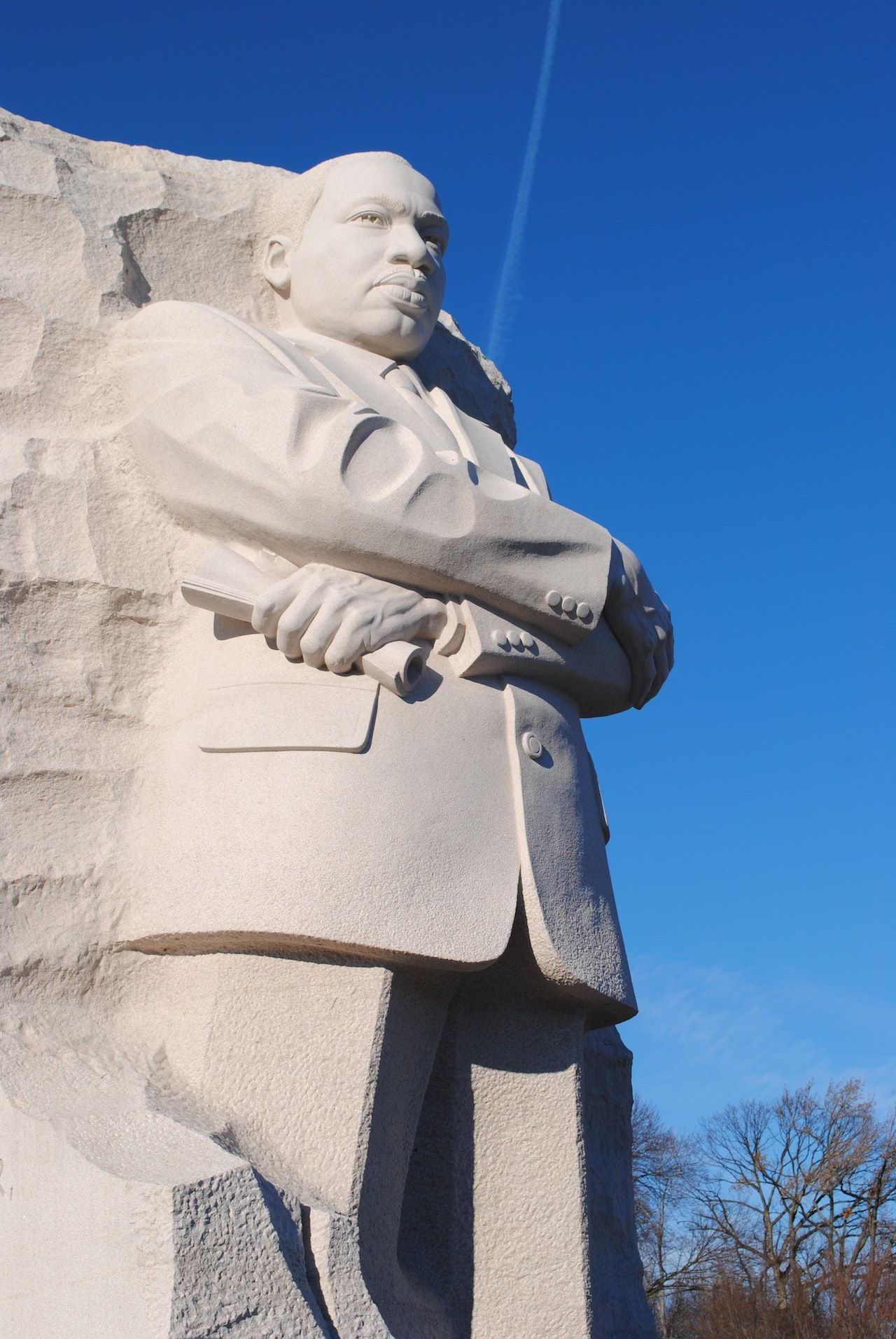
A speech written by Martin Luther King jr. at the "march on Washington," 1963 ( abridged )
I am happy to join with you today in what will go down in history as the greatest demonstration for freedom in the history of our nation.
Five score years ago a great American in whose symbolic shadow we stand today signed the Emancipation Proclamation.
This momentous decree is a great beacon light of hope to millions of Negro slaves who had been seared in the flames of withering injustice.
It came as a joyous daybreak to end the long night of their captivity.
But 100 years later the Negro still is not free.
One hundred years later the life of the Negro is still badly crippled by the manacles of segregation and the chains of discrimination.
One hundred years later the Negro lives on a lonely island of poverty in the midst of a vast ocean of material prosperity.
One hundred years later the Negro is still languished in the corners of American society and finds himself in exile in his own land.
So we’ve come here today to dramatize a shameful condition. In a sense we’ve come to our nation’s capital to cash a check.
When the architects of our Republic wrote the magnificent words of the Constitution and the Declaration of Independence, they were signing a promissory note to which every American was to fall heir.
This note was a promise that all men—yes, black men as well as white men—would be guaranteed the unalienable rights of life, liberty and the pursuit of happiness. . . .
We must forever conduct our struggle on the high plane of dignity and discipline. We must not allow our creative protests to degenerate into physical violence. . . .
must not lead us to distrust all white people, for many of our white brothers, as evidenced by their presence here today, have come to realize that their destiny is tied up with our destiny. . . .
We cannot walk alone. And as we walk we must make the pledge that we shall always march ahead. We cannot turn back.
There are those who are asking the devotees of civil rights, "When will you be satisfied?" We can never be satisfied as long as the Negro is the victim of the unspeakable horrors of police brutality.
We can never be satisfied as long as our bodies, heavy with the fatigue of travel, cannot gain lodging in the motels of the highways and the hotels of the cities.
We cannot be satisfied as long as the Negro’s basic mobility is from a smaller ghetto to a larger one.
We can never be satisfied as long as our children are stripped of their adulthood and robbed of their dignity by signs stating "For Whites Only."
We cannot be satisfied as long as the Negro in Mississippi cannot vote and the Negro in New York believes he has nothing for which to vote.
No, no, we are not satisfied, and we will not be satisfied until justice rolls down like waters and righteousness like a mighty stream. . . .
I say to you today, my friends, though, even though we face the difficulties of today and tomorrow, I still have a dream.
It is a dream deeply rooted in the American dream.
I have a dream that one day this nation will rise up, live out the true meaning of its creed: "We hold these truths to be self-evident, that all men are created equal."
I have a dream that one day on the red hills of Georgia sons of former slaves and the sons of former slave-owners will be able to sit down together at the table of brotherhood.
I have a dream that one day even the state of Mississippi, a state sweltering with the heat of injustice, sweltering with the heat of oppression, will be transformed into an oasis of freedom and justice.
I have a dream that my four little children will one day live in a nation where they will not be judged by the color of their skin but by the content of their character. I have a dream . . .
I have a dream that one day in Alabama, with its vicious racists, with its governor having his lips dripping with the words of interposition and nullification, one day right there in Alabama little black boys and black girls will be able to join hands with little white boys and white girls as sisters and brothers. I have a dream today . . .
This will be the day when all of God’s children will be able to sing with new meaning.
"My country, ’tis of thee, sweet land of liberty, of thee I sing.
Land where my fathers died, land of the pilgrim’s pride, from every mountain side, let freedom ring."
And if America is to be a great nation, this must become true.
So let freedom ring from the prodigious hilltops of New Hampshire. Let freedom ring from the mighty mountains of New York.
Let freedom ring from the heightening Alleghenies of Pennsylvania. Let freedom ring from the snowcapped Rockies of Colorado.
Let freedom ring from the curvaceous slopes of California.
But not only that. Let freedom ring from Stone Mountain of Georgia. Let freedom ring from Lookout Mountain of Tennessee.
Let freedom ring from every hill and molehill of Mississippi, from every mountain side.
Let freedom ring When we allow freedom to ring—when we let it ring from every city and every hamlet, from every state and every city, we will be able to speed up that day when all of God’s children, black men and white men, Jews and Gentiles, Protestants and Catholics, will be able to join hands and sing in the words of the old Negro spiritual, "Free at last, Free at last, Great God a-mighty, We are free at last."

A Tribute To Martin Luther King Jr
Martin Luther King Jr. Was A Civil Rights Activist In The 1950s And 1960s. He Led Non - Violent Protests To Fight For The Rights Of All People Including African Americans. He Hoped That America And The World Could Become A Colorblind Society Where Race Would Not Impact A Person's Civil Rights.
THE PEOPLE SHOULDN'T BE AFRAID OF THEIR GOVERNMENTS, THE GOVERNMENTS SHOULD BE AFRAID OF THE PEOPLE!!

OPERATION UNDER GROUND MILITIA HAS NOW BEGUN.

EXPECT US!!
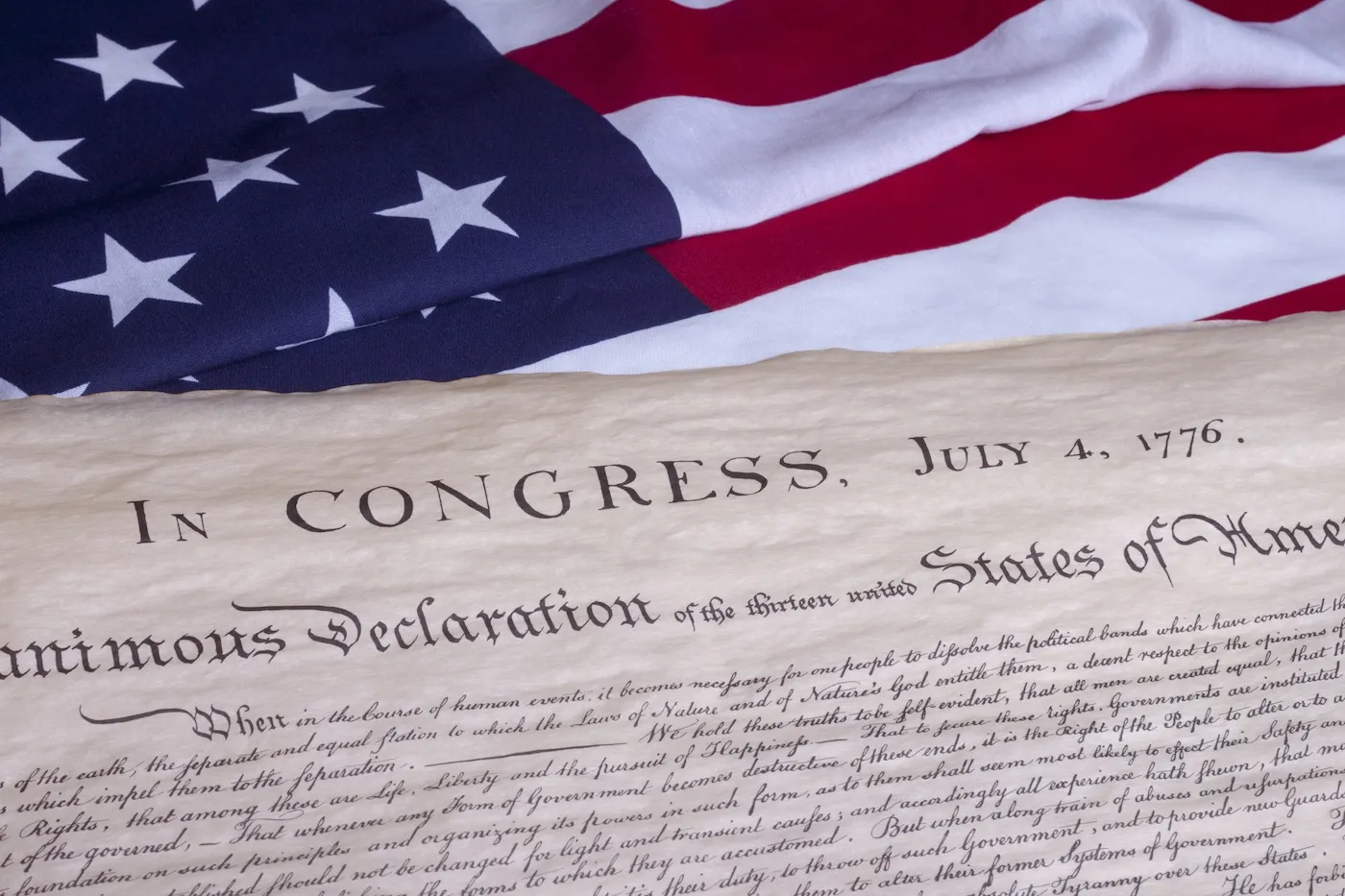
The Pursuit of Happiness Rightly Understood
The right to the pursuit of happiness is coherent only in the full theological context of the Declaration of Independence.
On the day C.S. Lewis died, his last written work was already in press with the Saturday Evening Post. "We have no ‘right to happiness,’" Lewis declared in the essay, by which he meant that we have no moral right to trample the rules of justice to gratify our impulses.
Lewis did concede that the idea of a right to the pursuit of happiness is "cherished by all civilized men, but especially by Americans." However, the authors of the American Declaration of Independence, according to Lewis, could only have meant that we have a right "‘to pursue happiness by all lawful means’: that is, by all means which the Law of Nature eternally sanctions and which the laws of the nation shall sanction."
In her new book The Pursuit of Happiness in the Founding Era: An Intellectual History, Carli Conklin has assembled a wealth of evidence that supports Lewis’s basic insight.
Far from being a "glittering generality" or a euphemism for property, the "pursuit of happiness" had a distinct and widely understood meaning in the eighteenth century.
It "refers to man’s ability to know the law of nature as it pertains to man," Conklin concludes, "and man’s unalienable right to then choose to pursue a life of virtue or, in other words, a life lived in harmony with those natural law principles."
This broadly Aristotelian understanding of the pursuit of happiness cut across the eclectic intellectual traditions that informed the American founding, including the classical Greek and Roman traditions, Christianity, the English common law, and Newtonian science.
It is telling, Conklin notes, that, throughout the drafting of the Declaration of Independence, and despite the numerous changes great and small that were made to the document, no one ever disputed the initial inclusion of "the pursuit of happiness" as an inalienable right alongside the rights of life and liberty.
"The lack of editing here," Conklin concludes,
would suggest one of two things: either the phrase "pursuit of happiness" really was a glittering generality with a non-substantive meaning to which no one would object, or it had a substantive meaning that was both understood by and agreeable to the wide variety of individuals involved in drafting and editing the Declaration.
Like Lewis, Conklin thinks the writers of that declaration meant that we have a right to pursue happiness by all lawful means, which are the only means by which we can attain happiness in the first place.
Perhaps this is a tautology—we have a moral right to do only what is morally right—but it is nonetheless important for what it affirms (the reality of the natural law) and for what it denies (any right to pursue happiness independent of the natural law).
The shared background assumptions that made sense of the inalienable right to the "pursuit of happiness" in the Founding era included a belief that God created the universe and the natural laws that direct the universe to its ultimate end or perfection.
These laws include the physical laws that govern the inanimate and non-rational parts of creation, but also the moral law of human nature.
The latter clarifies what constitutes genuine human well-being and thereby helps man to pursue his own happiness, or flourishing, by living a life of virtue.
The eighteenth-century English jurist William Blackstone even went so far as to reduce the natural law to "God’s one paternal precept: ‘that man should pursue his own true and substantial happiness’" (as opposed to that fleeting and temporal happiness that is unmoored from virtue).
James Wilson—one of only six men to sign both the Declaration of Independence and the US Constitution—later echoed Blackstone when he summarized the natural law with "this one paternal command: Let man pursue his own happiness and perfection."
All of this is hiding in plain sight.
In his Commentaries on the Laws of England, Blackstone wrote that "when the supreme being formed the universe, and created matter out of nothing, he impressed certain principles upon that matter, from which it can never depart, and without which it would cease to be."
He then went on to draw an analogy between the laws of physical nature and the moral law of human nature, writing that,
God, when he created matter, and endowed it with a principle of mobility, established certain rules for the perpetual direction of that motion; so, when he created man, and endowed him with free will to conduct himself in all parts of life, he laid down certain immutable laws of human nature, whereby that free will is in some degree regulated and restrained, and gave him also the faculty of reason to discover the purport of those laws.
As Conklin notes, Blackstone was clear "that the immutable laws of nature that pertain to the physical world (inanimate or animate, irrational creation) and the immutable law of nature that pertains to man (animate, rational creation) are put in place by a Creator God to govern all creation."
This same framework and distinction are preserved in the Declaration of Independence, even in Jefferson’s original rough draft that declared the "sacred and undeniable" truth that "all men are created equal" and that "from that equal creation" men derive "inalienable" natural rights.
The final document, after extensive drafting and editing, appeals to the "Laws of Nature and of Nature’s God" and clearly identifies that God as the "Creator" of nature and the "Supreme Judge of the world," who governs his creation through an overarching "Divine Providence."
The pursuit of happiness is embedded in the Declaration in a larger theological context, just as it is in Blackstone’s Commentaries. Admittedly, Jefferson was not an admirer of Blackstone (he called him a "honeyed Tory"), but Conklin makes a convincing argument that Jefferson tracked Blackstone closely in his treatment of the pursuit of happiness.
Yes, Jefferson and some of the principal Founders―including the other members of the Committee of Five that wrote the Declaration, especially Benjamin Franklin and John Adams—held unorthodox religious beliefs.
Nonetheless, all of these men publicly and privately affirmed a shared natural theology: that there is a Creator who has imbued the world with discernible natural laws, both physical and moral, and who governs the affairs of men with his sustaining and intervening providence.
Michael Pakaluk, following Avery Cardinal Dulles, refers to this natural theology as the "deist minimum" that in late eighteenth-century America was combined with providentialism and was "held by Christians of all denominations (and also by Jews and philosophical theists), who nonetheless might differ on what additional doctrines were revealed."
This combination of the deist minimum with providentialism served as a workable and stable public theology that made sense of the Declaration’s right to the pursuit of happiness: the latter is coherent only against this backdrop.
The right was understood to be bounded by a God-given natural law that was affirmed by each of the various intellectual traditions that underpinned the American Founding.
If Conklin is right about all of this, then we must consider the possibility that Lewis was right as well: that the privileging of individual will over and against the natural moral law is the outgrowth not of the acceptance of the inalienable right to the pursuit of happiness, rightly understood, but rather of its repudiation.

Moral principles should be derived from experience about what makes people happy, not from logic.